Key facts
- A Rutgers-led study found that Europa's icy shell is a stronger barrier than previously assumed, with rising ocean water likely freezing shut within hours.
- The study suggests shallow liquid water on Europa is more likely from localized melting in the ice shell than from direct upwellings of the deep ocean.
- Europa Clipper will reach its closest approach to Earth on Thursday, Dec. 3, 2026, passing west of Africa at 3:14 p.m. EST at a distance of about 1,950 to 2,133 miles (3,140 to 3,450 kilometers).
- People near the closest approach trajectory, especially in southern Europe and Africa, may be able to observe Europa Clipper with relatively large hobby telescopes during the Dec. 3, 2026 flyby.
Europa Clipper will pass west of Africa on Thursday, Dec. 3, 2026, coming within about 1,950 to 2,133 miles (3,140 to 3,450 kilometers) of Earth at 3:14 p.m. EST on its way to Jupiter.
People in southern Europe and Africa may be able to observe the spacecraft with relatively large hobby telescopes during the Dec. 3 flyby, NASA said, giving observers along the flight path a rare opportunity to see a deep-space probe before it departs for the outer solar system.
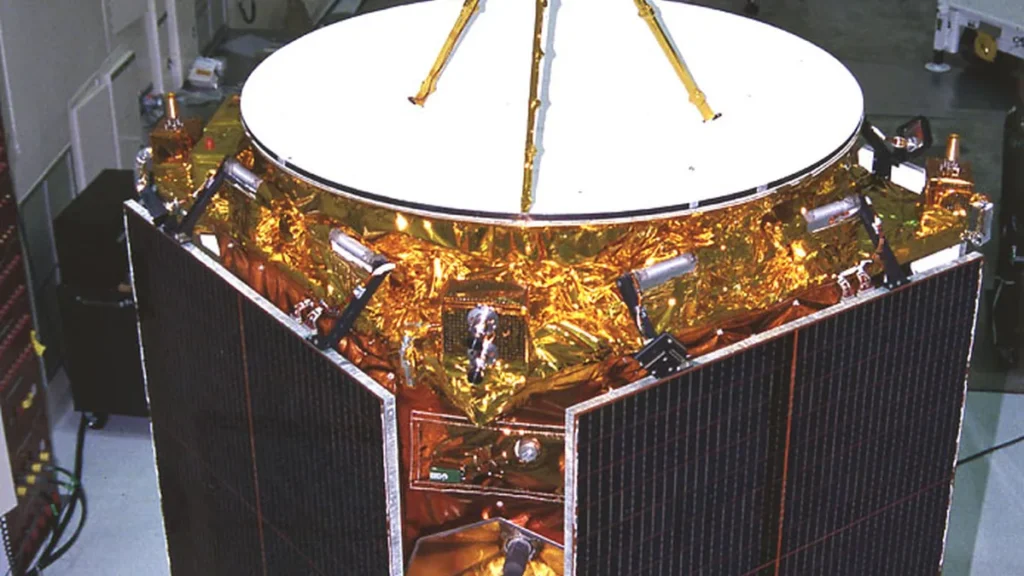
The 12,800-pound (6,000-kilogram) spacecraft will use Earth’s gravity to change its trajectory and gain speed toward Jupiter, saving propellant by borrowing the planet’s orbital momentum. NASA said the maneuver alters the craft’s path without consuming large amounts of propellant.
The December encounter is the final major gravity assist before Jupiter, following a March 1, 2025, pass about 550 miles (884 kilometers) above Mars that reduced the spacecraft’s speed relative to the Sun and adjusted its orbit to guide it back toward Earth. The flyby will pass roughly 3,200 kilometers above Earth’s surface, far closer than the Moon’s average distance of about 380,000 kilometers. This Mars-then-Earth maneuver sequence is called a Mars-Earth gravity assist.
All nine Europa Clipper science instruments will collect data during the Earth flyby as teams compare the results with existing Earth observations and fine-tune the instruments as needed, treating the encounter as a rehearsal for working together at Europa.
The Europa Clipper Magnetometer will be absolutely calibrated using Earth observations to refine pre-launch and in-flight calibrations for Jupiter measurements, according to NASA. The instrument aims to verify that Europa holds a vast ocean beneath its ice by studying how Jupiter’s magnetic field interacts with the moon.
E-THEMIS, the thermal imaging instrument, will observe Earth every eight hours during the approach. E-THEMIS captured Mars in infrared during the mission’s Mars flyby. At Europa, the instrument will track warm regions to help determine where water is closest to the surface or may have erupted onto it.
We're coming down into the gravity well of Earth, following its curve, and shooting out again
Robert Pappalardo, Europa Clipper's project scientist at NASA's Jet Propulsion Laboratory, NASA Science
Pappalardo described the spacecraft being pulled by Earth’s gravity and continuing on a changed trajectory moving faster than before. He said the magnetometer must pin observations to something known to understand its actual value, and the Earth flyby enables absolute calibration.
Erin Leonard, Europa Clipper project staff scientist at JPL, said teams are practicing operational intricacies and learning to work together to produce the best science during the Earth encounter. She characterized the Earth encounter as a rehearsal for the teamwork required during science operations at Europa.
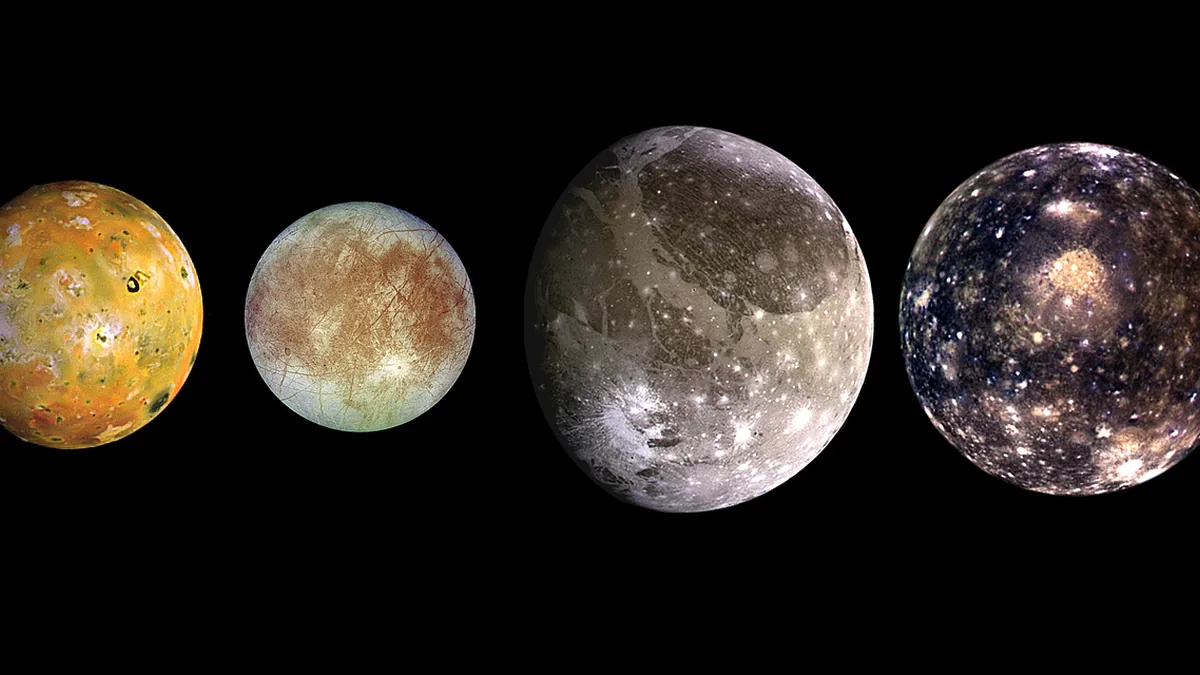
Europa Clipper is scheduled to enter orbit around Jupiter on April 11, 2030, using Ganymede’s gravity to slow down and be captured by the planet’s gravity rather than orbiting Europa directly. After arriving at Jupiter, the spacecraft will orbit the planet rather than Europa itself to limit radiation exposure while repeatedly approaching the moon for close observations.
The spacecraft will orbit Jupiter and approach Europa only when necessary because Jupiter’s intense radiation risks damaging electronics during long stays near the moon. It is planned to complete 49 close flybys of Europa to determine the thickness of its icy shell, investigate its composition, and characterize its geology.
Europa Clipper is the largest spacecraft NASA has launched into deep space. It launched October 14, 2024, aboard a SpaceX Falcon Heavy rocket with a launch mass of about six tons, including about 2.75 tons of propellant.
Caltech manages NASA’s Jet Propulsion Laboratory, which leads Europa Clipper development alongside the Johns Hopkins Applied Physics Laboratory for the agency’s Science Mission Directorate. APL, working with JPL, Goddard, Marshall, and Langley, designed the main spacecraft body, and the Planetary Missions Program Office at NASA Marshall executes program management.
Europa’s global ocean contains more than double the water of all Earth’s oceans combined. The mission will investigate ice thickness, the ocean relationship, surface materials, and geology to evaluate whether a habitable environment exists rather than to discover life itself, and no evidence of life on Europa has been obtained at this time. The mission’s findings will let scientists better gauge the possibility of habitable worlds outside our own.
A Rutgers-led study published July 23 in Nature Astronomy found that Europa’s icy shell is a stronger barrier than previously assumed, with rising ocean water likely freezing shut within hours. Computer simulations by Lujendra Ojha’s team modeled liquid water moving through fractures in the ice. The study suggests shallow liquid water is more likely from localized melting in the ice shell than from direct upwellings of the deep ocean, affecting how scientists will interpret possible shallow reservoirs detected by future missions.




Join the discussion