Key facts
- Rocket Lab booked eight new Neutron missions in the third quarter of 2026 across five constellation operators worth more than $515 million.
- Rocket Lab's Neutron launch manifest has grown to 16 missions, leaving the next available flight opportunities in the 2030s.
- Kepler Communications booked one dedicated Neutron launch in Q3 2026.
- Rocket Lab guided fourth-quarter 2026 revenue to between $270 million and $290 million.
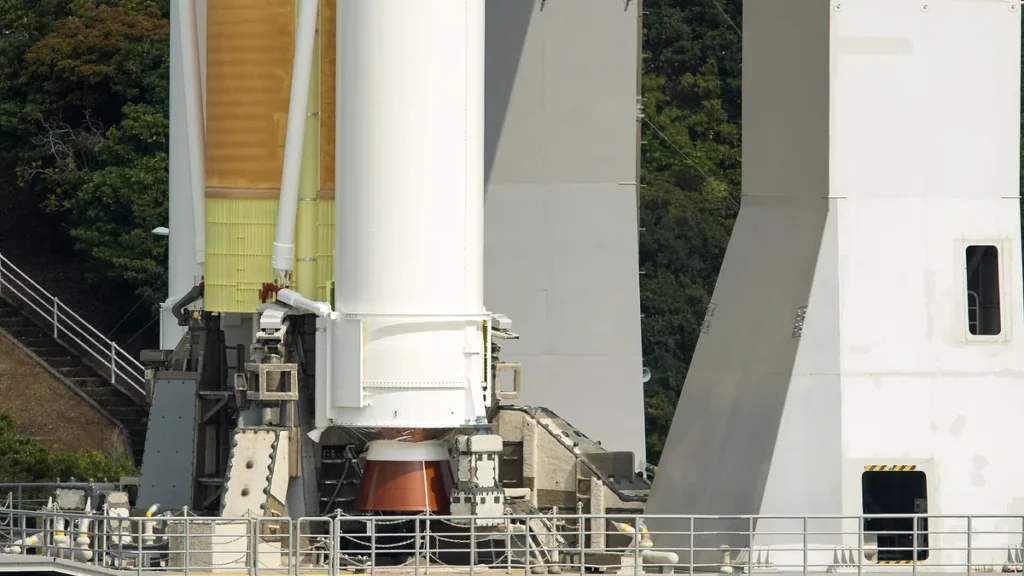
Rocket Lab raised the listed launch price for its Neutron medium-lift rocket from $55 million to $70 million as the company reported record contract activity for the vehicle in November 2026.
The company booked eight new Neutron missions during the third quarter of 2026 across five constellation operators for more than $515 million, with missions selling at the new $70 million base rate. CFO Adam Spice said Rocket Lab rejected lower-priced bookings to pursue higher revenue per mission instead of filling more slots at a discount.
Contracts for Neutron launches require down payments and cancellation fees, terms intended to give the program firmer financial footing if customers follow through on booked missions.
ICEYE agreed to three dedicated Neutron launches starting in late 2028. Muon Space booked two dedicated launches, one in 2029 and one in 2030, and Starcloud booked a single dedicated launch in 2029. Kepler Communications booked one dedicated Neutron launch in the third quarter of 2026.
Rocket Lab’s Neutron manifest now includes 16 missions, leaving flight opportunities for the 2030s as the next available slots. The company says demand before the debut has filled the manifest through the current decade, leaving no near-term openings for customers who want to fly sooner. SpaceX is ending its Transporter rideshare program, which is contributing to a U.S. launch capacity shortage.
The Neutron rocket is a reusable medium-lift vehicle designed to carry up to 13,000 kg to low Earth orbit, with its debut set for 2027. The first launch has been delayed to no earlier than 2027 after voids appeared in carbon composite layers of a forward dome. Peter Beck said the flaws could weaken the structure, leading the company to change how it builds the part. After fixing the process and building an aft dome with the revised method, the company made a new forward dome, delaying the first flight.
Neutron’s second stage and its thrust module reached Wallops Island in October 2026, and Rocket Lab completed construction and curing of the Stage 1 Forward Dome. The dome came from the automated fiber placement machine and finished heat-and-pressure processing. Rocket Lab plans to finish building and inspecting the dome before the first quarter of 2027. Peter Beck said he prefers showing real-time progress over committing to a date he could be forced to retract, saying customers value reliable rockets more than early ones.
The Pentagon issued a conditional $150 million loan commitment for the reusable Neutron rocket, and media reports say the proposed interest rate is SOFR plus about 100 basis points. SOFR is a benchmark interest rate used in financial contracts.
Rocket Lab said its record revenue for the third quarter of 2026 was $268 million, while another source listed the quarterly figure at $267.8 million. The company also reported a record backlog of $3.6 billion made up of 117 launches and more than 55 spacecraft, while another source put the backlog at $3.57 billion, up 52 percent sequentially. The company signed $470 million in space-systems contracts during the quarter, up 512 percent from a year earlier.
Rocket Lab posted a GAAP net loss of $79.7 million for the third quarter, and the result included a $27.3 million charge tied to paying off debt that weighed on the headline figure without affecting daily operations. The company’s adjusted EBITDA was a loss of $18 million for the quarter.
Cash flow from operations under GAAP was positive at $7.2 million for the third quarter. The company guided revenue for the fourth quarter of 2026 to between $270 million and $290 million and expects a loss of $14 million to $20 million.
RKLB shares jumped 15 percent to $53.07 on Friday, marking the best session since June, although the stock ended the week down 3 percent. The stock rose nearly 2 percent overnight before Monday’s earnings and finished Monday up 10 percent after weakness in after-hours trading following the full quarterly results. RKLB shares are down 24 percent since the start of the year. The chief executive has previously linked Neutron operations to the company’s broader profitability.



Join the discussion