Key facts
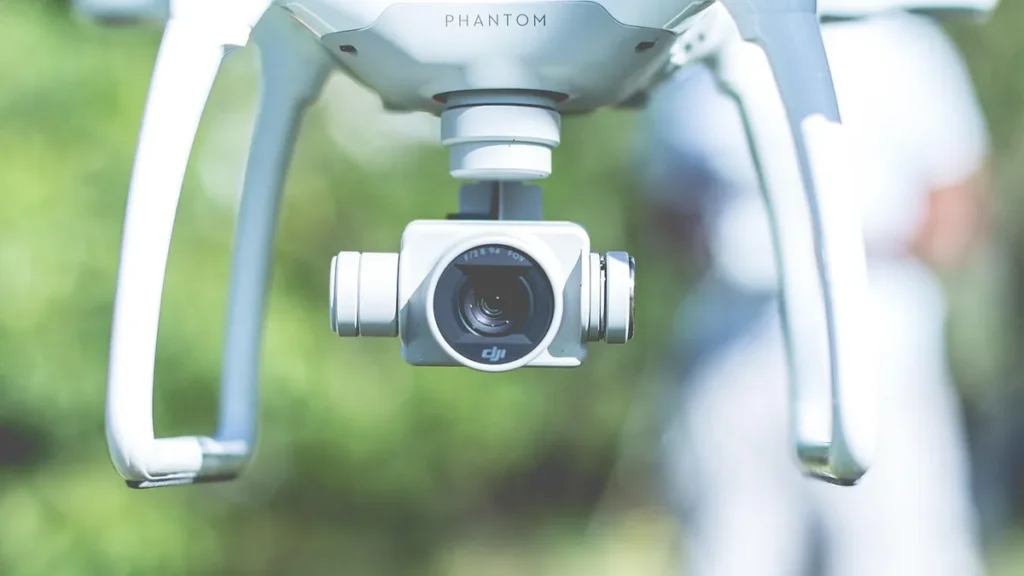
- Ukraine's Ministry of Defense said on Saturday, 24 October 2026, that broader access to Starlink had been restored for military drones and other fast-moving equipment.
- Speed restrictions on SpaceX's Starlink and Starshield services lasted for more than a week before access was restored.
- Speed restrictions broke Starlink links for drones moving faster than about 100 mph, while platforms above roughly 160 km/h saw connections become unreliable or fail.
- Elon Musk acknowledged that Starlink access in Ukraine had been restricted.
Ukraine’s Ministry of Defense said on Oct. 24, 2026, that Starlink had restored broader access for military drones and other fast-moving equipment after speed restrictions that broke satellite links for drones moving faster than about 100 mph.
The restrictions lasted for more than a week before access returned. On Oct. 14, reports said Starlink cut off service in Ukraine for drones flying faster than 100 mph, while platforms above roughly 160 km/h saw connections become unreliable or fail. The limit severely disrupted drone interceptions, communications and air defense tasks. As of Saturday, Ukrainian officials said Starlink connections were remaining stable at speeds of 250 mph.
Elon Musk acknowledged that SpaceX had restricted Starlink access in Ukraine. According to Musk, SpaceX limited Ukraine’s Starlink use because the military violated service terms. Musk also accused Ukraine’s military of exploiting the service for offensive drone strikes.
Officials and sources disagree on who ordered the slowdown, with some pointing to SpaceX and others to the White House. Ukraine accused both President Donald Trump and Elon Musk, both denied involvement, and Rubio and Hegseth denied U.S. government responsibility. JD Vance, U.S. Vice President, said “effectively directing him on what to do.” Senators on both sides of the aisle in the U.S. called for an investigation into the decision.
Starlink is SpaceX’s commercial low-Earth orbit broadband constellation. Access is sold on a paid basis, and typical latency runs 20–40 ms. The customers range from civilians and businesses to maritime operators, aviation firms and government agencies, including military users. Coverage reaches nearly everywhere on Earth through ground stations plus small phased-array user terminals. As of late 2026, the Starlink constellation had well over 11,000 active satellites.
SpaceX sells the service directly under commercial terms.
The company offers Starshield as its national-security service for government and military customers. The offering covers secure communications, Earth observation and hosted payloads that use enhanced encryption. Starshield relies on dedicated, rugged user terminals that carry a higher price tag. Contracts set the service levels, prioritization rules and operational limits for Starshield.
The United States buys most Starshield services, while some are also offered to allies including the United Kingdom.
Starlink and Starshield share infrastructure. Starshield communications primarily use the Starlink satellite constellation as a backbone. The two systems share launch capability, engineering work, inter-satellite laser links and ground stations with terrestrial gateways. Different control authorities, higher-assurance cryptography and segregation come from dedicated terminals and separate network gateways when required.
The distinction between Starlink and Starshield lies in encryption, terminals, prioritization, ownership of certain payloads and who holds operational control. Outages or policy intervention in one constellation can affect both services.
The disruption demonstrated the danger of relying on a privately owned satellite network where continued access depends on the operator’s goodwill. When access to both systems stopped, Ukrainian forces appeared unable to defend themselves. Musk remains firmly in control over SpaceX and by extension Starlink, with about 82% of voting power through a special stock class after the company went public in 2026. SpaceX began supplying large numbers of Starlink terminals to Ukraine in February 2022, and the Ukrainian military has since become deeply dependent on the system.
In February 2023, SpaceX imposed speed limits to prevent Ukrainian drones from using the system, arguing Starlink was never intended as a weapon. The Biden administration negotiated arrangements with SpaceX to secure the future provision of Starlink.
EU foreign policy chief Kaja Kallas said Starlink is really necessary for Ukraine and that Europe cannot replace this capability in the short term. Kaja Kallas said “Starlink is really necessary for Ukraine. And unfortunately, in short term, Europe can’t replace this capability.” French MEP Christophe Grudler called it unacceptable that Ukraine’s and Europe’s security depend on the goodwill of a single American billionaire or on Donald Trump’s decisions.
Europe’s IRIS2 is a planned sovereign multi-orbit system not expected to become operational until 2030 because of political frictions and financing issues. Work continues while the timeline slips due to politics and financing. Europe wants Ukraine to join Govsatcom quickly as a stopgap. The program pools public and commercial satellite resources to provide secure government communications.
Compared with Starlink, other LEO broadband constellations generally offer lower peak capacity and slower deployment timelines. Most competing systems do not have the same concentration of laser links between satellites. Right now, nothing offers the same blend of satellite numbers, global coverage and low latency for mobile users that Starlink provides.
The Eutelsat OneWeb constellation includes several hundred satellites serving enterprise, government and mobility markets. In India, Eutelsat works with Nelco Limited, which belongs to the Tata Group, and with Bharti Airtel. Amazon Leo, formerly Project Kuiper, has launched hundreds of satellites and is scaling production for commercial service in many markets.
Guowang, also called China SatNet, targets roughly 13,000 satellites, while Qianfan, known as Thousand Sails or G60, aims for up to about 15,000. Guowang reached around 220 satellites in orbit by late October 2026, and Qianfan reached roughly 250. Both Chinese constellations began deployment in 2024, use different orbital shells and remain well behind their 2026 targets due to launch cadence and unspecified technical constraints. Together, Guowang and Qianfan field fewer than 500 satellites, while Starlink operates more than 11,000 active spacecraft.
China blocks consumer Starlink service, which is accelerating domestic launches. Both Chinese programs are at an early stage, with service maturity, density, latency and global reach yet to match Starlink.
Russia’s Bureau 1440 is developing the Rassvet LEO broadband constellation as a domestic alternative. By late October 2026, Russia had launched 38 Rassvet satellites across two batches, and several experienced difficulties raising their orbits. Plans call for launching 156 Rassvet satellites by the end of 2026, with partial commercial service expected by late 2027 and a long-term target of 900 satellites.
Several operators hold licenses for satellite broadband in India, though commercial LEO consumer services remain unauthorized pending spectrum allocation and security clearances. Reliance Jio holds a Global Mobile Personal Communications by Satellite license and proposed around 1,600 LEO satellites and 23 ground stations across India. The plan aims at broadband and direct-to-device service, with a test flight near September 2027, several hundred satellites by 2030 and full deployment after that. In India, Bharti-backed Eutelsat OneWeb has moved further along with regulatory approvals and works with Tata Group companies on ground infrastructure, while Starlink and Amazon Leo are also waiting for regulatory clearance.
All of these systems will require reliable PNT for operation.
Virtually all current LEO broadband terminals need accurate position information from global navigation satellite system (GNSS) receivers such as GPS, BeiDou, Galileo or GLONASS, and without that data they cannot form precise beams or keep reliable links while moving. Starlink has demonstrated GNSS-independent positioning derived from its own constellation, but similar capabilities are not widely available. Most other systems, including planned Russian and Chinese broadband constellations and systems proposed for India, have not publicly demonstrated independent GNSS modes.
Until NavIC regains PNT capability, Indian terminals will depend on GPS, GLONASS, BeiDou or Galileo. NavIC is short of the four satellites needed for reliable PNT services because of aging satellites, atomic-clock failures and the loss of NVS-02 due to a propulsion problem. ISRO scheduled NVS-03 launch on Oct. 30 aboard GSLV Mk II to help restore NavIC capability, with further NVS satellites planned.
Satellite industry consultant Christian von der Ropp explains why Starlink is uniquely difficult to replace in this situation. James Cemmell, VP of Institutional Partnerships for Open Cosmos, shares a European startup perspective on how governments are looking to commercial players like Open Cosmos to bring new options to market. Von der Ropp joins Cemmell on the On Orbit podcast to discuss the disruptions, part of how Europe moves forward from the Starlink disruptions.



Join the discussion