Key facts
- Radio noise leaking from satellites affects radio telescopes used to understand the universe.
- Fewer than 2,000 operational satellites orbited Earth less than a decade ago, while more than 15,000 are in orbit today and millions more are planned.
- Radio telescopes capture signals produced soon after the Big Bang, enabling study of the early universe and its evolution over the past 13.8 billion years.
- Scaling the model to 300,000 satellites, described as a small fraction of planned totals, results in the loss of every geodetic measurement.
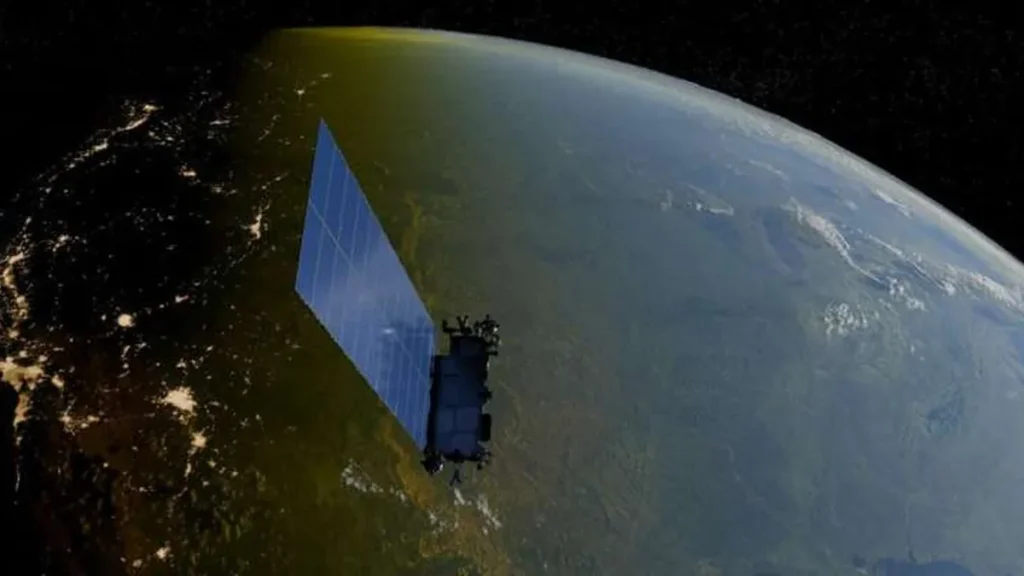
A report published Nov. 4, 2026, says radio noise leaking from satellites circling Earth is disrupting radio telescopes and the GPS signals used for positioning, navigation and timing, and it sets out ways to cut the leakage.
The hardware on board creates unintended radio energy beyond the signals used to carry data between satellites and ground stations. Shielding built into satellite electronics keeps unintended radio energy away from launch rockets, yet that leakage starts once the satellites are operating in space. Much of the attention on orbital growth has focused on space junk, while radio noise has received less scrutiny.
Because cosmic radio waves are faint, radio telescopes require protection against strong human-made radio signals such as those from mobile phones and communications devices. These telescopes sit in quiet places for that reason. They capture signals dating to soon after the Big Bang, which lets astronomers study the early universe across 13.8 billion years of evolution.
Satellite radio noise affects the radio telescopes used to study the universe. The Allen Telescope Array studies fast radio bursts and pulsars and searches for signals of extraterrestrial technology, while interference from satellite signals transmitted to Earth can disrupt its sensitive observations.
Radio astronomy’s roots run to Dover Heights in Sydney’s eastern suburbs, where researchers in the 1940s identified the first radio sources from beyond the solar system, and to 1946, when Ruby Payne-Scott became the first woman to work as a radio astronomer worldwide. Australia’s portfolio includes the MWA and ASKAP telescopes, and the SKA-Low, described as the largest low-frequency radio telescope in the world, is under construction at a remote Western Australian site. Australia is uniquely positioned to lead the protection effort because it has the telescopes, the heritage and the quietest skies, building on the Dover Heights discoveries, Payne-Scott’s work and the MWA, ASKAP and SKA-Low portfolio.
Satellite radio noise also corrupts measurements supporting GPS positioning, navigation and timing. Radio telescopes fix on distant galaxies and use those galaxies as beacons to anchor Earth-based positioning, navigation and timing.
A model of 12,000 satellites found that direct-to-phone systems already damage 59% of the geodetic measurements that underpin GPS with current satellite numbers. The modeling used Australian telescopes that gauge Earth’s rotation by fixing on distant galaxies and linking celestial with terrestrial reference frames. Scaled to 300,000 satellites, which the source describes as a small fraction of planned totals, the model loses every geodetic measurement. That shows the danger as the number of operational satellites grows toward the millions.
In 2024, a Western Australian research team used a radio telescope to measure Starlink satellite energy at frequencies from 70 to 300 megahertz. The measured emissions topped International Telecommunication Union limits between 50% and 70% of observations, above the 2% of measurements allowed by the guideline. The result is sobering because the measurements date to 2024, and the orbital population has grown since then.
Telescopes in New South Wales operated by a CSIRO-led team spanned 1 gigahertz to 14 gigahertz, the range of mobile phones, Wi-Fi and satellite TV, and measured the licensed signals, harmonics and faint electrical hum coming from electronics on board; only licensed signals face regulation. Researchers used the measurements to model how Australian telescopes, including geodesy instruments, are affected.
The International Telecommunication Union’s Radiocommunication Sector sets spectrum rules for astronomers and commercial operators, but satellite transmitter rules rely on simulations of intended transmissions and ignore unintended radio energy. Enforcement falls to national regulators such as the Australian Communications and Media Authority. The system works with ground transmitters but not with satellites, since no telescope regulator has authority over a foreign satellite. As a result, satellite leakage can escape the oversight that protects ground-based radio astronomy.
The evidence indicates that satellite operators need to shield electronics across a broader range of radio frequencies and cut leaked radio energy. The key first step is routine monitoring of satellite radio interference to create a strong evidence base to support policy decisions, standards work and enforcement.
Monitoring of this kind would ultimately supply evidence for enforcement. The report also describes a window to fix these issues before satellite numbers surge. According to the report, if the window passes before satellite numbers explode, radio astronomy as currently known could end, and this could put GPS and other economically vital technologies at risk.
A collaboration begun on June 18, 2025, between the SETI Institute and SpaceX aims to protect sensitive radio astronomy observations at the Allen Telescope Array from interference produced by satellite communications, including certain direct-to-cell transmissions from Starlink satellites. SpaceX had earlier worked with the National Radio Astronomy Observatory and developed satellite boresight avoidance capabilities. Dr. David DeBoer, an Allen Telescope Array researcher, said the collaboration proves science and technology can advance together when coordination is right.
In rural Shasta County, California, the Allen Telescope Array hunts for extraterrestrial technological signals and studies fast radio bursts and pulsars. The Allen Telescope Array is the only observatory ever built specifically for SETI research and supports a wide array of research efforts. A satellite passing through the telescope’s field of view can cause signal saturation, overloading the array’s sensitive receivers and making observations unusable for a time. Starlink satellites from SpaceX offer internet service and mobile text connectivity across the U.S., using certain frequencies the array can detect, which creates potential interference as satellites pass.
SpaceX has worked with radio observatories alongside the U.S. National Science Foundation to reduce signal saturation. The techniques affect only one satellite at a time, and only for a few seconds, so service continuity and observation quality are both maintained. At the array, researchers are pioneering spectrum management techniques such as radio dynamic zones, a flexible method of allocating frequencies.
SpaceX asked the Federal Communications Commission to block the Viasat-3 F2 satellite, saying it would cause severe interference to Starlink, and sought to reverse approval of the geostationary spacecraft. The company filed its petition on a Friday, urging the FCC to reconsider its decision allowing the Viasat-3 F2 to enter U.S. service next month. SpaceX says Viasat did not complete the coordination required to prevent harmful interference between Starlink’s network and the F2 satellite. David Goldman, SpaceX’s vice president of satellite policy, wrote a 25-page petition arguing that Viasat had more than five years to coordinate but did not.
SpaceX says the Viasat-3 F2 satellite will cause interference with Starlink downlink transmissions for consumers in the U.S. The dispute involves the 18.8 to 19.3GHz and 28.6 to 29.1GHz bands, which regulators have cleared for Starlink transmissions between space and Earth. Viasat plans to use the spectrum for data downloads and uploads on its Viasat-3 F2 geostationary satellite, positioned more than 22,000 miles away.
In late July, the FCC approved U.S. market access for the Viasat-3 F2 on the condition that Viasat coordinates with low-Earth-orbit providers such as SpaceX. Viasat’s license conditions bar legacy technology in primary next-generation satellite bands without coordination agreements or a technical demonstration.
SpaceX cites Viasat’s internal analysis, which indicates the F2 satellite would cause Starlink downlink interference about one out of every three uses of the 18.8 to 19.3GHz band. “Viasat is not coordinating with SpaceX today, and has demonstrated no intention of doing so in the future,” David Goldman said.
On Monday, the United Nations said frequencies used for weather forecasting, disaster warnings, climate monitoring and water management need protection from interference. Protection from harmful interference is especially important because some sensors measure weak naturally occurring signals at specific frequencies. The ITU and WMO said Monday that the expansion of wireless and satellite services into more frequencies increases interference risks for the bands meteorological systems require.
Radio frequency interference could disrupt measurements and cut data quality or availability, weakening the forecasts and alerts that authorities use to prepare for environmental hazards. Vital systems including weather radar, marine and aircraft observation, lightning tracking and hydrological monitoring rely on these frequency bands. During a Geneva meeting, the ITU and WMO called on governments and regulators to protect frequency access vital for meteorology. “Preventing harmful radio interference is a matter of public safety and can save lives,” Doreen Bogdan-Martin said.

Join the discussion